
How Much Does a Bathroom Remodel Cost in Houston? Real Ranges for 2026
Bathroom remodel cost in Houston ranges from $8,000 to $75,000+ in 2026. Learn what drives pricing and how to avoid surprise invoices with a forensic-first
By the Texas Greatest Remodelers team
Updated October 2, 2026
By Texas Greatest Remodelers · Updated August 10, 2026
A bathroom remodel in Houston typically costs $15,000–$40,000 for a mid-range update in 2026, with smaller refreshes starting around $8,000 and luxury overhauls exceeding $60,000. Your final price depends on size, materials, labor, and whether hidden issues like water damage or outdated plumbing surface. With the right contractor, you can avoid surprise invoices.
Key Takeaways
- Mid-range full bathroom remodel in Houston costs $18,000–$45,000 in 2026.
- Cosmetic refreshes start around $8,000; luxury master baths can exceed $75,000.
- Layout changes like moving a toilet or shower drain can add $10,000+ in plumbing costs.
- Waterproofing with Schluter or equivalent membranes is critical to prevent future mold and rot.
- Hidden damage from leaks or humidity often increases costs once walls are opened.
How Much Does a Bathroom Remodel Cost?
A full bathroom remodel in Houston runs $18,000 to $45,000 for a mid-range gut renovation in 2026, with smaller powder room updates starting around $8,000 and high-end master baths reaching $75,000 or more. Those are real project numbers, not national averages slapped onto a Houston zip code. The spread is wide because every bathroom has different square footage, different plumbing locations, and different surprises behind the tile. A quote that ignores those variables is a guess, not a price.
We don’t guess. We measure. Sarah Chen, one of our clients, told us we were the only contractor who actually measured before quoting her bathroom. That’s not a compliment we should have to earn—it should be standard—but Houston homeowners know it isn’t. Most bids you’ll get are built on walk-throughs and assumptions. Ours are built on a forensic inspection that identifies what’s actually happening behind your walls and under your floor before we put a number in front of you.
The biggest cost drivers in a Houston bathroom remodel are layout changes, waterproofing, and what we find when we open things up. Moving a toilet or shower drain across the room adds plumbing rough-in costs that can push a project from $20,000 to $30,000 fast. Tile selection matters too—basic ceramic runs $3 to $8 per square foot installed, while large-format porcelain or natural stone hits $15 to $30. But the line item that separates a bathroom that lasts from one that fails in three years is the waterproofing system. We install Schluter or equivalent membranes behind every tile surface, floor to ceiling in wet areas. Skip that step and you’re budgeting for mold remediation later.
And yes—sometimes we find rot, bad subfloor, or plumbing that’s been leaking into the framing for years. When we do, we stop, photograph it, and show you before we proceed. Robert Valdez watched our project manager do exactly that mid-job. No surprise invoices. No “trust me” conversations. Just documentation and a decision made together.
That’s why we run every project on a $0 Down model. You don’t write a check until the work is done and you’re satisfied. No deposits. No liens. No games. We take the risk, so you don’t have to. One Partner. One Warranty. $0 Down.
Why Are Bathrooms So Expensive to Renovate?
Bathrooms are expensive because you’re paying for a room where water and electricity coexist in a space the size of a walk-in closet. Every surface has to be perfect or it fails spectacularly. The real cost driver isn’t the tile you pick. It’s the labor density and the unforgiving nature of the work. A bathroom packs more skilled trades per square foot than any room in your house: plumbing rough-in, electrical for lighting and exhaust, waterproofing, tile setting, glass installation, and finish carpentry. When those trades are coordinated by separate contractors, the price climbs further because each one builds their own profit margin and schedule cushion into the bid.
The hidden-cost problem is what catches most Houston homeowners off guard. You commit to a number, the walls come open, and suddenly there’s a rotted subfloor around the toilet flange or mold spreading behind the shower surround from a slow leak that’s been festering for years. Now you’re paying for remediation before any new work goes in. That’s not a contractor upselling you—it’s the reality of Houston’s humidity and the fact that most bathrooms weren’t waterproofed properly when the house was built. We’ve seen it hundreds of times: the tile looked fine from the outside, but the substrate underneath was disintegrating.
This is exactly why the multi-subcontractor model breaks down in bathrooms. The plumber doesn’t care about the tile substrate. The tile contractor doesn’t touch plumbing. The electrician isn’t checking for moisture behind the vanity. Nobody owns the whole picture. When we run a bathroom renovation, our in-house crew handles every trade under one roof. There’s no finger-pointing between subs because there are no subs. One phone number, one timeline, one warranty. And because we operate on a $0-down model, you’re not financing our work before a single tile is set. We carry the risk until you’re satisfied. That changes the entire dynamic of what gets discovered behind the walls and how it gets handled.
What Is the Average Price of a Bathroom Remodel?
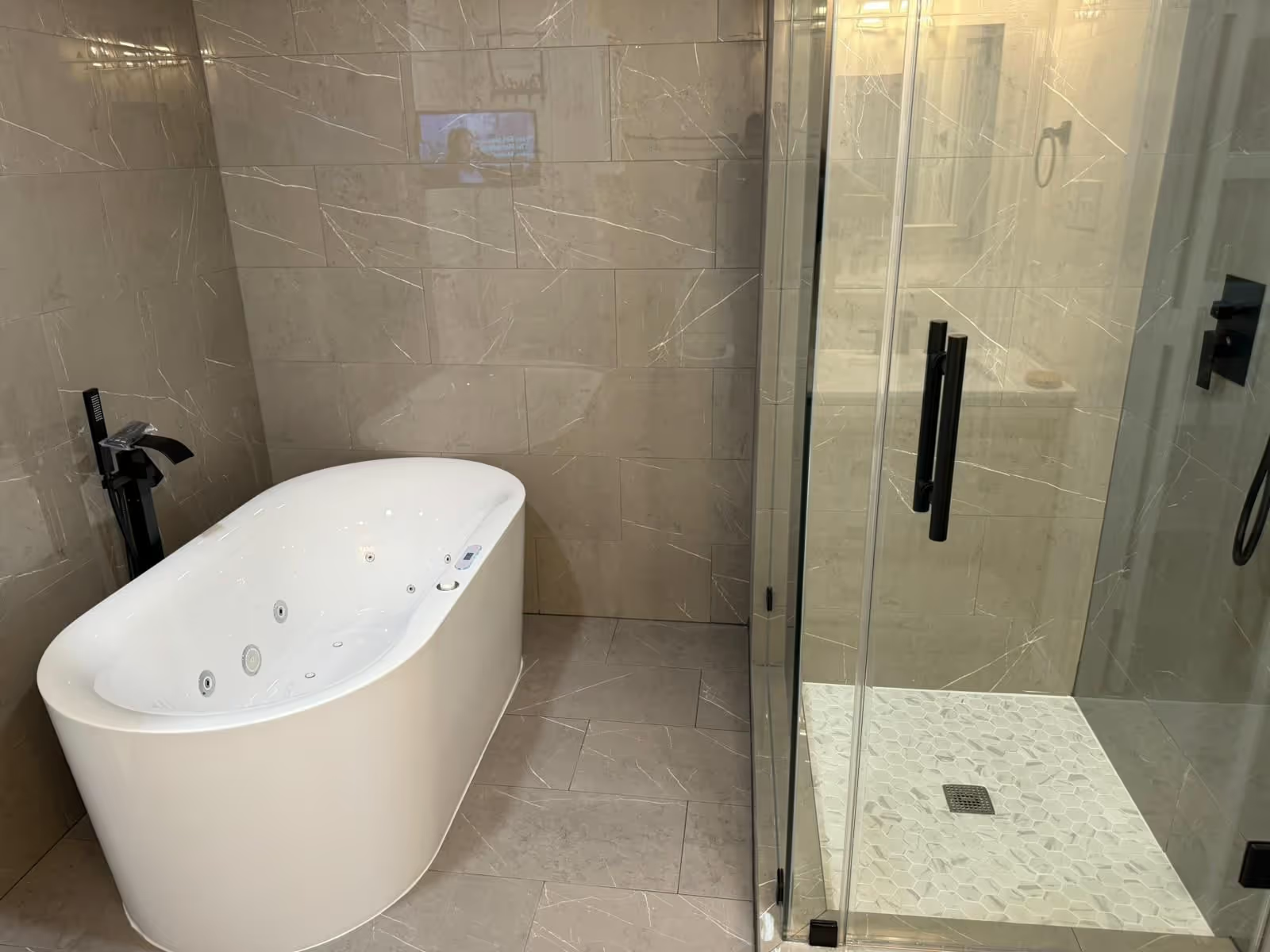
In Houston, a mid-range bathroom remodel that guts the space down to the studs and rebuilds it with quality tile, a new vanity, and updated fixtures lands between $18,000 and $35,000. A cosmetic refresh—swapping out the vanity top, replacing the mirror, and updating the faucet—can run $8,000 to $15,000, while a luxury master bath with a custom walk-in shower, freestanding tub, and heated floors starts at $50,000 and climbs from there.
Those are real numbers for Houston in 2026, not national averages that ignore our humidity, our slab foundations, and what’s actually hiding behind the tile. The single biggest variable isn’t the finish you pick. It’s what the crew finds when they open the wall. Rot from a slow shower pan leak. A subfloor that’s been soaking up moisture for a decade. Cast iron plumbing that’s rusted through. That’s why the spread between quotes can be so wide, and why the lowest bid rarely stays the lowest bid once demolition starts.
We take the risk, so you don’t have to. Our $0 Down model means you’re not writing a check before we’ve proven anything. When we open a wall and find damage, we photograph it, show you exactly what we’re seeing, and give you a real number before we proceed. Our in-house crew handles everything: plumbing, tile, electrical, waterproofing. One phone number. One timeline. One partner who’s accountable for the whole job, not a general contractor who subs out the work to three crews you’ve never met. That’s how we’ve completed over 800 projects without the finger-pointing that happens when something goes wrong and every subcontractor blames the one before them.
How Much Does It Cost to Remodel Two Bathrooms?
You’ll pay $35,000 to $65,000 to gut and rebuild two bathrooms in Houston in 2026—but the real number depends on whether you’re remodeling them simultaneously or one at a time. Doing both at once under a single project plan almost always costs less per bathroom because your contractor mobilizes once, orders materials in bulk, and doesn’t carry overhead across two separate timelines. That’s the model we run: one crew, one schedule, one point of contact, and $0 down before we start.
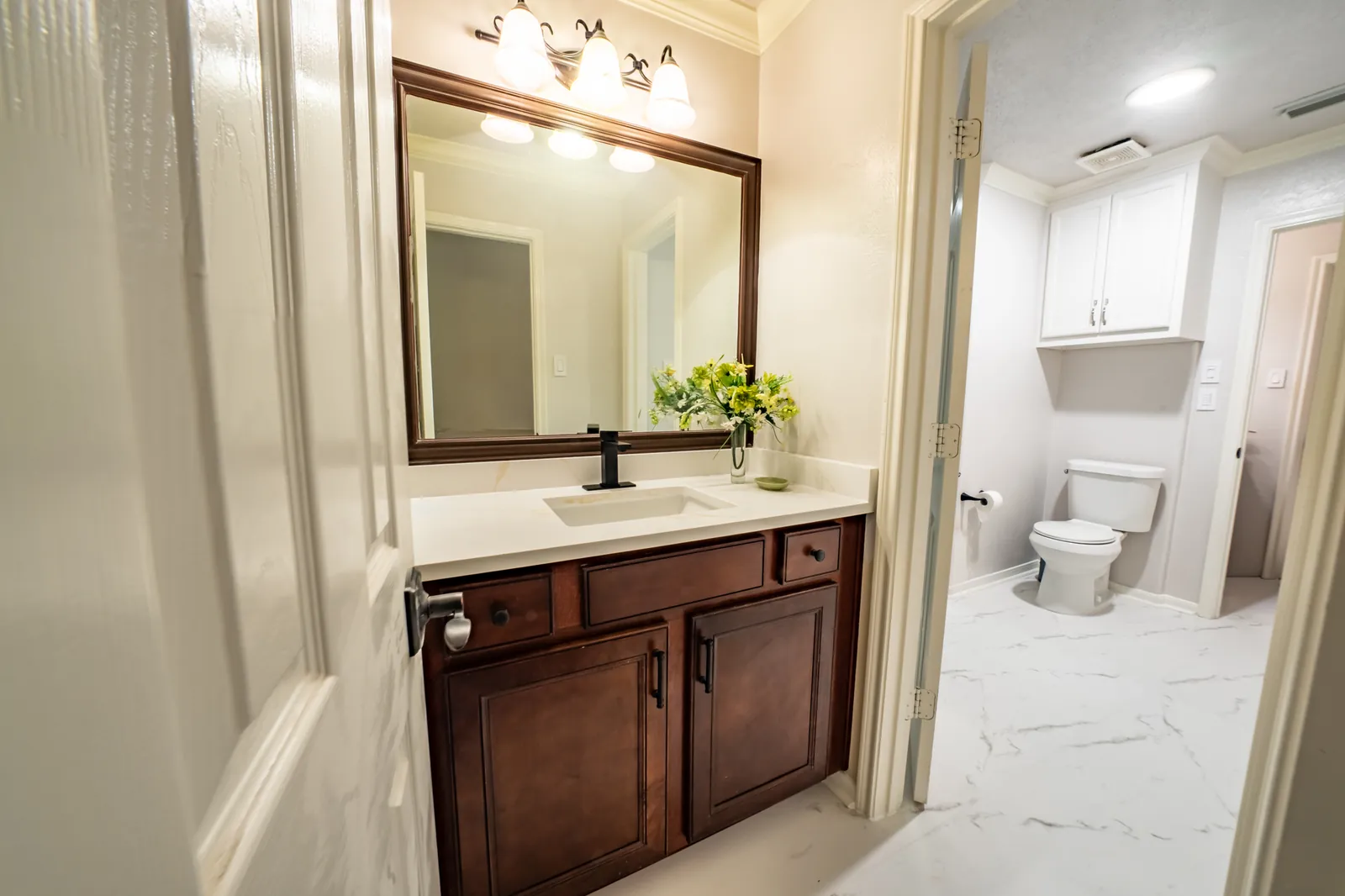
The per-bathroom cost drops when you combine them. A single mid-range bathroom gut remodel in Houston runs $20,000 to $35,000. Two done together typically land at $17,500 to $32,500 each—the lower end for back-to-back hall baths with standard fixtures, the higher end when one is a primary bath with a curbless shower, freestanding tub, or custom vanity. The savings come from shared dumpster fees, single-permit applications, and our in-house crew moving from one room to the next without idle days between subcontractors.
What drives the price apart from scope is what’s behind the walls. Houston’s humidity means we routinely find subfloor rot around toilets and tubs, or cast-iron drain lines that have rusted through. On a two-bathroom project, that hidden damage can add $2,000 to $8,000—but you’ll know before we proceed. Our project managers photograph everything and show you in real time, the way Robert Valdez described when we stopped mid-job to document rot and get his approval before moving forward. No surprise invoices. No finger-pointing. One partner, one warranty, and your price locked in before the first tile goes in.
Detailed Line-Item Costs for Labor vs. Materials in Houston
Here’s the reality most Houston homeowners discover too late: the final price of your bathroom remodel is split roughly 60% materials and 40% labor, but those percentages shift dramatically the moment a contractor has to fix something the last guy buried behind drywall. We build every quote with real line items because you deserve to know where your money is going before we spend a dime of it. And since we operate on a $0 Down model, you’re never funding our work in advance—you pay when the phase is complete and you’ve walked the space yourself.

| Scope Item | Materials Cost (Range) | Labor Cost (Range) | What Drives the Number |
|---|---|---|---|
| Demolition & Disposal | $150 – $400 (dump fees, containment) | $500 – $1,200 | Tile removal is labor-intensive; cast iron tub removal adds hours. |
| Rough Plumbing (relocate drain/supply lines) | $200 – $800 (PEX, PVC, fittings) | $800 – $2,500 | Moving a toilet flange or shower drain across a slab is the single biggest labor variable. |
| Electrical (new circuits, GFCI, lighting) | $300 – $900 (wire, breakers, cans) | $600 – $1,800 | Houston code requires dedicated 20-amp circuits for bathroom receptacles; older panels may need a sub-panel. |
| Shower/Tub Surround Waterproofing | $400 – $1,200 (Schluter membrane, sealant, backer board) | $800 – $2,000 | We use full waterproofing systems behind every tile installation—no green board shortcuts. Labor includes 24-hour flood test. |
| Tile Installation (floor & walls) | $800 – $3,500 (tile, thinset, grout) | $1,500 – $4,500 | Large-format tile and intricate patterns demand more layout time and waste. Houston humidity means epoxy grout is standard for us, which adds material cost but prevents mold. |
| Vanity & Countertop | $600 – $3,000 (stock to custom quartz) | $300 – $800 | Pre-fab quartz tops are faster; custom fabrication adds lead time but zero additional labor from our crew. |
| Fixtures (shower valve, faucet, toilet) | $400 – $2,000 | $400 – $1,200 | Thermostatic shower valves cost more but prevent temperature spikes when someone flushes a toilet—a non-negotiable in family homes. |
| Painting & Trim | $100 – $300 (premium acrylics) | $400 – $1,000 | We spray and back-roll for a cabinet-grade finish; caulking and prep are included in labor. |
Plumbers in Houston typically bill at $75–$150 per hour, electricians at $85–$140, and skilled tile setters at $60–$100. When you hire separate trades, those hourly rates stack with each contractor’s minimum trip charge. Our in-house crew eliminates that duplication—one timeline, one point of contact, and no finger-pointing between a plumber and a tiler when a shower pan leaks. If we uncover rotted subfloor or corroded galvanized pipe behind the wall, you’ll know the cost to fix it before we proceed, not after the tile is up. That’s how we keep the price real from day one.
Impact of Houston's Climate on Material Choices and Long-Term Costs
Houston’s climate will punish the wrong material choice faster than anywhere else in Texas. The combination of 90%+ average humidity, sudden tropical downpours, and clay soil that moves your slab means a bathroom built with standard drywall and big-box tile backer is going to fail—not in twenty years, but in five. You’ll see grout cracking, baseboards swelling, and the unmistakable smell of trapped moisture behind the walls. That’s why we spec every bathroom remodel with mold-resistant drywall as the bare minimum, and we go further with full waterproofing membranes behind every tile surface. We use systems like Schluter or equivalent liquid-applied membranes that create a completely sealed envelope inside the shower and around the tub—so water vapor that pushes through grout never reaches your framing.
The slab is another Houston-specific problem. Concrete wicks ground moisture up through capillary action, and if you lay tile directly on it, two things happen: the bond breaks down over time, and any minor foundation movement telegraphs straight through as a cracked tile. We install high-grade moisture barriers or liquid membranes between the slab and your flooring to stop hydrostatic pressure from destroying the installation. Then we add an anti-fracture membrane that decouples the tile from the concrete—the slab can shift a fraction of an inch during a dry summer and your floor stays intact. These aren’t upsells. They’re the difference between a bathroom that looks great for the first year and one that still looks new when you sell the house.
Flooding risk pushes flooring decisions toward porcelain tile, luxury vinyl plank, or sealed natural stone—materials that can survive a few inches of water without warping or delaminating. We’ve pulled out enough swollen laminate and ruined engineered wood from ground-floor bathrooms to tell you: if it’s not rated for wet areas, don’t put it anywhere near a Houston bathroom. When we quote your project, these material upgrades are baked into the number from day one. You’re not getting a surprise change order when we open the walls—we already planned for what Houston throws at a house. One partner. One warranty. $0 down. We take the risk, so you don’t have to.
Cost Comparison: Remodeling a Historic Houston Home vs. a Newer Suburban Home
Remodeling a bathroom in a Heights or Montrose bungalow costs 20-40% more than the same footprint in a Katy or Sugar Land home built after 2000, and the difference has nothing to do with tile selection. In a historic home, you are not just updating a bathroom—you are untangling a century of previous work while preserving what makes the house worth owning in the first place.
The biggest cost driver is what lives behind the walls. Homes built before 1970 in Houston’s historic districts routinely contain cast-iron drain stacks that have corroded to the diameter of a straw, galvanized supply lines so clogged with mineral buildup that water pressure drops to a trickle, and cloth-wrapped wiring that was never designed for modern GFCI requirements. Replacing all of that in a single bathroom adds $3,000 to $7,000 before you pick a single finish. In a newer suburban home, the plumbing is PVC or PEX, the wiring is Romex, and the subfloor is intact OSB—you open the wall and you are ready to build.
Asbestos abatement is the second line item that catches historic homeowners off guard. Vinyl sheet flooring and the black mastic adhesive underneath it, both common in mid-century Houston bathrooms, frequently test positive for asbestos. A licensed abatement crew adds $1,500 to $3,000 to the project, and the required clearance testing tacks on another few hundred. No one in a 2005 Sugar Land home is writing that check.
Then there is the framing. Historic homes settle unevenly over decades on Houston’s gumbo clay, which means the floor is rarely level and the walls are rarely square. To install a Schluter waterproofing system and large-format tile correctly, we are grinding high spots, floating low spots with self-leveler, and sometimes reframing a wall to get a flat plane. That prep work can add $2,000 to $4,000 to the labor line. A newer suburban slab is generally within tolerance from day one.
The upside is that a well-executed historic bathroom remodel returns more per dollar at resale because buyers in those neighborhoods expect updated systems, not cosmetic flips. But you need a contractor who diagnoses the infrastructure before quoting, not one who gives you a number based on square footage and hopes for the best. We take the risk, so you don’t have to—$0 down, and we show you exactly what we found before we ask for a dollar.
Permitting Process and Costs Specific to Houston
Before you start picking tile, you need to know the real cost of a building permit in Houston—and the timeline hit if you skip it. The City of Houston requires a permit for any bathroom remodel that moves plumbing, alters the floor plan, or opens walls to replace electrical or mechanical systems. A straightforward cosmetic refresh where you swap a vanity and paint doesn’t trigger one. But if you’re gutting the bathroom, moving a toilet, or adding a new exhaust fan, you’re pulling a permit. The permit fee itself is calculated based on the valuation of the work. For a mid-range bathroom remodel valued around $25,000, you’re looking at a building permit fee in the $250 to $400 range. You’ll also need separate electrical and plumbing permits, each running roughly $75 to $150, which your contractor should pull under their license.
Here’s where the process hits your timeline. After submitting plans to the Houston Permitting Center, you’re waiting two to four weeks for approval on a simple residential remodel. Then come the inspections. You’ll need a rough-in inspection for the plumbing and electrical before the walls get closed up, and a final inspection once everything is finished. Each inspection requires scheduling a window, and missing one can push your project back a week. This isn’t red tape for the sake of it. The inspections are the only official record that the work behind your new shower surround was done to code and won’t flood your house or start a fire.
When we manage your bathroom remodel, the permitting process is our problem, not yours. We handle the full application, post the permit card on your front door, and coordinate every inspection so you’re not the one waiting at home for a four-hour window. We carry a $2 million General Liability policy and Worker’s Compensation, and we’ll put your name on the certificate of insurance before work starts. That means if an inspector flags something, it’s our name on the line to fix it—not a subcontractor you’ve never met. The real risk of skipping a permit isn’t just a fine. It’s discovering during a future home sale that unpermitted work voids your homeowner’s insurance claim or kills a deal at the closing table. We don’t let that happen. We take the risk, so you don’t have to.
Return on Investment for Bathroom Remodels in Houston's Real Estate Market
A mid-range bathroom remodel in Houston typically recoups 60% to 70% of its cost at resale, but that number shifts dramatically depending on your neighborhood. In high-demand areas like The Woodlands or Sugar Land, where buyers expect move-in-ready homes with updated finishes, a well-executed bathroom renovation can push your home into multiple-offer territory—recovering closer to 75% or more of your investment. In transitional neighborhoods inside the 610 Loop, like parts of the Heights or Montrose where older homes dominate, a bathroom that addresses outdated plumbing and waterproofing behind the walls often delivers stronger returns than a cosmetic refresh alone, because it signals to buyers that the infrastructure is sound.
The real ROI calculation isn’t just about what you spend—it’s about what you avoid. A bathroom remodel that uncovers hidden rot or a failing subfloor mid-project and handles it transparently protects your resale value in ways a surface-level update never will. Houston’s humidity means moisture problems fester behind tile for years before anyone sees them. When a buyer’s inspector finds that during escrow, you’re looking at a repair credit that erases any profit you hoped to make. A renovation that addresses those issues upfront—with waterproofing membranes like Schluter systems and properly sloped shower pans—becomes a selling point rather than a liability.
Neighborhood comps tell the rest of the story. In Katy, where new construction sets the baseline, a bathroom remodel needs to match or exceed builder-grade finishes to justify a higher list price. In older sections of Sugar Land, where homes sit on larger lots and buyers are willing to renovate, a clean, functional bathroom with solid plumbing may be all you need to stay competitive. The common thread across every Houston zip code is that buyers pay a premium for work they don’t have to redo. A single warranty covering the entire remodel—not separate warranties from a tile guy, a plumber, and a painter—gives the next owner one phone number to call, and that peace of mind translates directly into a stronger offer.
Frequently Asked Questions
What does a basic bathroom remodel cost in Houston?
A cosmetic refresh starts around $8,000, while a mid-range gut renovation runs $18,000–$35,000.
How much does a luxury master bathroom remodel cost in Houston?
Luxury master baths start at $50,000 and can exceed $75,000 with custom features like heated floors.
What factors increase bathroom remodel costs the most?
Layout changes like moving plumbing fixtures can add $10,000+, and hidden water damage often raises costs once walls are opened.
Why is waterproofing important in a bathroom remodel?
Proper waterproofing with membranes like Schluter prevents mold and rot, which are common in Houston's humid climate.
Does Texas Greatest Remodelers require a deposit for bathroom remodels?
No, they operate on a $0 Down model—you pay only after the work is completed and you're satisfied.
How does Texas Greatest Remodelers handle unexpected damage during a remodel?
They stop work, document the issue with photos, and discuss it with you before proceeding, avoiding surprise invoices.
Experience the Difference
Let us show you what a professional, transparent remodeling experience looks like.