
How to choose a roof replacement contractor in Houston TX after storm damage
$0 down. Forensic inspection. You pay only after the work passes your approval.
In this article
- Why contractor selection matters more than the roof itself
- What storm chasers do that local contractors don't
- Houston roofing installation standards that actually hold
- Harris County permit requirements for roof replacement
- How the $0-down model changes contractor accountability
- Frequently asked questions
- What to do right now if your roof is actively leaking
Key takeaways
Storm chasers typically require large upfront deposits and carry no long-term accountability once they leave the area.
Hurricane-rated roofing in Houston requires a 6-nail fastening pattern, synthetic underlayment, and a post-installation triple magnet sweep for nail removal.
Harris County requires a building permit for full roof replacements, and work done without one can void your homeowner's insurance coverage.
A $0-down, pay-when-satisfied contract structure shifts financial risk to the contractor, not the homeowner.
Why contractor selection matters more than the roof itself
The contractor you hire determines more about your roof's long-term performance than the materials on the truck. A premium architectural shingle installed with the wrong nail pattern, insufficient underlayment, or skipped flashing will fail in the first Gulf Coast storm season regardless of the manufacturer's warranty. In Houston's post-storm environment, the volume of available contractors spikes within days, and not all of them are equipped for the structural demands of Gumbo Clay soil movement, high-humidity decking conditions, or Harris County code compliance.
Homeowners who have lived through the process describe it clearly: "I need someone to look at my roof right away, I think it was damaged in the storm." That urgency is real. But urgency is exactly what predatory contractors count on. The pressure to get someone on the roof immediately can lead to signed contracts with unfamiliar companies, large deposit payments, and no clear recourse if the work is substandard.
A qualified residential roofing contractor starts with a documented inspection, not a verbal estimate handed over in a driveway. The inspection should identify damage to the decking and structural supports, not just the visible shingle layer. Hidden damage to the roof deck is common after high-wind events and becomes far more expensive when discovered after the new roof is already installed.

What storm chasers do that local contractors don't
Storm chasers are out-of-state or transient roofing crews that follow major weather events into affected markets. They are not always fraudulent, but they carry structural risks that local contractors don't. Understanding the difference is the clearest way to protect yourself during a vulnerable time.
A storm chaser typically operates on volume, moving through neighborhoods quickly to sign as many contracts as possible before the post-storm demand cools. Their business model depends on large upfront deposits because they have no local reputation to protect and no long-term presence in the market. If the installation fails six months later, there is no local office to call, no project manager to reach, and no warranty with a company that still operates in your zip code.
Local contractors with a permanent Houston presence have a different incentive structure. Their reputation is tied to the neighborhoods they serve. They pull permits through Harris County, which creates a public record of the work and requires inspections. They carry continuous liability coverage and workers' compensation because Texas contractors working without it face real legal exposure. And when something goes wrong two years after installation, they are still answering the phone.
The questions worth asking before signing anything:
- Do you have a permanent Houston business address?
- Will you pull the Harris County building permit, or am I responsible for that?
- What is your workmanship warranty, and who do I contact if I have a claim?
- Do you require a deposit before work begins?
The deposit question alone filters out a significant portion of post-storm opportunists. A contractor who funds materials and labor before collecting payment has real financial skin in the job. One who requires 30-50% upfront before a shingle is touched has transferred all the financial risk to you.
Houston roofing installation standards that actually hold
Storm damage roof replacement in Houston requires installation methods engineered for Gulf Coast conditions, not generic residential construction standards. The difference between a roof that survives a Category 2 event and one that loses shingles in a tropical storm often comes down to three specific installation decisions.
6-nail hurricane fastening pattern. Standard residential roofing uses 4 nails per shingle. Hurricane-rated roofing in Harris County uses 6 nails per shingle, placed according to the manufacturer's high-wind installation specification. This pattern dramatically increases wind-uplift resistance and is required for roofs seeking impact-resistant or wind-mitigation insurance credits in Texas. A contractor who does not mention nail count during the estimate conversation has likely not installed to this standard.
Synthetic underlayment. Felt paper underlayment absorbs moisture and deteriorates in Houston's humidity, particularly during the days or weeks between deck exposure and final shingle installation. Synthetic underlayment resists moisture, tears, and UV exposure during the open-roof window. It also provides a secondary water barrier if shingles are compromised in a future storm. For older homes with existing decking vulnerabilities, this layer is not optional.
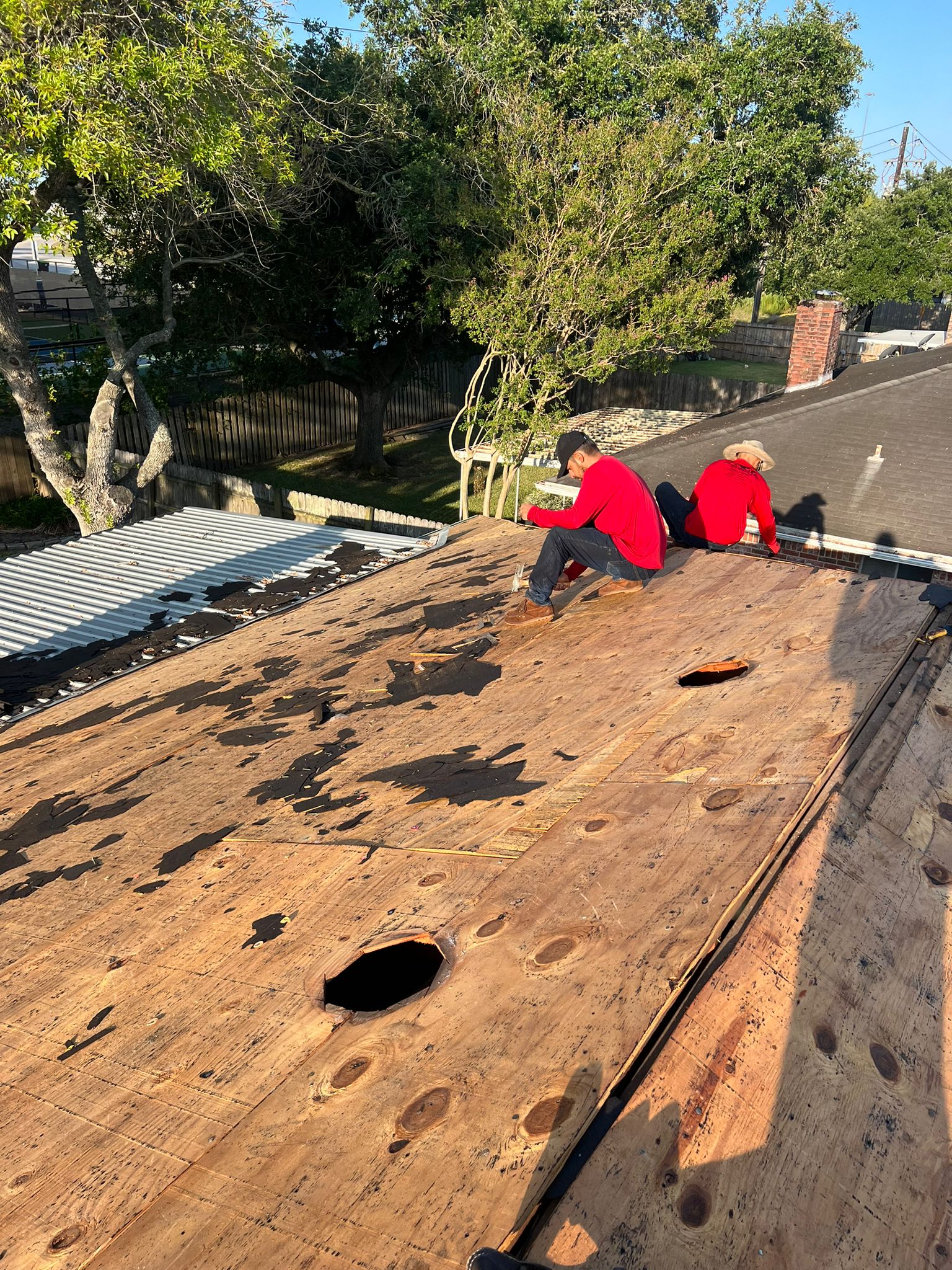
Triple magnet sweep. Roofing generates hundreds of loose nails per square of material removed and installed. Nails left in the yard, driveway, and landscaping create liability and safety hazards for families and pets. A triple magnet sweep, conducted in three directional passes after project completion, is the standard that separates thorough crews from fast ones.
Material selection also matters for Houston's specific climate. Impact-resistant Class 4 shingles qualify for insurance premium discounts in Texas and are rated to withstand hail up to 2 inches in diameter. Architectural shingles with a minimum 130 mph wind rating are appropriate for the Houston market. For homes with low-slope or flat roof sections, modified bitumen or TPO membranes outperform standard shingles in standing-water conditions common after heavy rainfall.
Learn more about our full roofing and restoration services and how each trade is coordinated under a single project plan.
Harris County permit requirements for roof replacement
Harris County requires a building permit for complete roof replacements on residential structures. This is not optional, and the consequences of skipping it are significant for Houston homeowners.
Work performed without a permit can void your homeowner's insurance policy's coverage for subsequent damage related to the roof. If a post-installation leak causes interior damage and the insurer discovers the replacement was done without a permit, the claim may be denied. The permit also triggers a required inspection by a county building official, which provides independent verification that the installation meets current building code requirements.
The permit process requires the contractor to submit documentation including the scope of work, material specifications, and proof of contractor licensing and insurance. A qualified roofing contractor in Houston handles this process as part of the project. If a contractor tells you permits are unnecessary for a full replacement, or asks you to pull the permit yourself, treat that as a warning sign.
Harris County also follows the International Building Code with Texas amendments, which specifies minimum wind-resistance requirements, underlayment standards, and flashing installation methods. A permitted job is an inspected job, and an inspected job has a documented record that protects your home's resale value and insurance standing.
For homeowners in Katy, Sugar Land, Pearland, or The Woodlands, municipal permit requirements may differ slightly from unincorporated Harris County. A contractor with genuine local experience knows which jurisdiction applies to your address and handles the correct permit application without prompting.
How the $0-down model changes contractor accountability
The standard roofing industry payment model requires a deposit before work begins, often ranging from 25% to 50% of the total project cost. For a full roof replacement in Houston, that can mean $3,000 to $8,000 paid before a single crew member arrives. That deposit structure transfers financial risk entirely to the homeowner and removes the contractor's primary motivation to complete the work to a satisfactory standard.
A $0-down, pay-when-satisfied model inverts that dynamic. The contractor funds all materials and labor from the first day of work through final cleanup and inspection. The homeowner pays only after the project is complete and confirmed to their satisfaction. This structure only works for a contractor who is financially stable enough to carry project costs and confident enough in their workmanship to stake payment on the outcome.
"How can I possibly afford a whole new roof right now? We weren't prepared for this." That concern is legitimate and common after unexpected storm damage. The $0-down model addresses the cash-flow problem directly. There is no large upfront payment required, and financing options allow homeowners to spread the remaining cost after project completion without taking on debt before the work is done.
TX Greatest Remodelers operates on this model across all eight trades, including roofing. We fund materials and labor before you pay a dollar. Our lifetime transferable warranty covers both workmanship and materials, and it transfers to the next owner if you sell the home. That warranty only has value if the company honoring it is still operating in your market years from now. We have been in Houston since 2015.
If you are evaluating contractors and want to understand what a forensic-first roof inspection looks like before committing to any scope of work, visit our about us page to learn how we approach every project.
Frequently asked questions
How do I know if I need a full roof replacement or just repairs after a storm?
A full replacement is typically necessary when damage covers more than 25-30% of the roof surface, when the decking or structural supports are compromised, or when the existing roof has exceeded its functional lifespan. A repair addresses isolated damage areas when the surrounding roof system is structurally sound. A thorough inspection that evaluates the decking, not just the shingle surface, is the only reliable way to determine which is appropriate.
What is hurricane rated roofing and do I need it in Houston?
Hurricane rated roofing refers to materials and installation methods tested to withstand high-wind conditions, typically defined as 130 mph or greater wind resistance. In Houston, where Gulf Coast storms and tropical systems are a regular occurrence, hurricane rated installation standards are appropriate for all residential roofing. Beyond storm protection, qualifying installations may reduce your homeowner's insurance premium through Texas wind-mitigation credits.
How do I avoid being scammed by a storm chaser contractor?
Verify that the contractor has a permanent Houston business address, pulls permits through Harris County, carries continuous liability and workers' compensation insurance, and does not require a large upfront deposit. Ask for a written workmanship warranty with a named contact for claims. Out-of-state or transient crews rarely provide all four. A contractor who requires 40-50% down before starting work has no financial accountability to you once they have that payment.
What does roof replacement cost in Houston TX?
Roof replacement cost in Houston typically ranges based on roof size, pitch, material selection, and extent of deck damage discovered during removal. Architectural asphalt shingles are the most common choice and generally fall in a mid-range cost tier. Impact-resistant Class 4 shingles carry a higher material cost but often qualify for insurance premium reductions that offset the difference over time. A detailed written estimate after a full inspection is the only accurate way to establish cost for your specific home.
What to do right now if your roof is actively leaking
If your roof is actively leaking after a storm, the priority sequence is clear. Document the damage with photos before any temporary repairs are made, because that documentation supports your insurance claim. Apply emergency tarping to limit interior water intrusion, but treat it as a 24-72 hour measure, not a solution. Schedule a full roof inspection with a contractor who will assess the decking and structural components, not just the visible shingle damage.
The interior damage concern is real. A slow leak that continues for days before a contractor arrives can saturate insulation, damage ceiling joists, and create conditions for mold growth behind drywall. Getting an accurate picture of the full damage scope early protects you from discovering additional problems after the new roof is already installed.
TX Greatest Remodelers serves Houston, Katy, The Woodlands, Sugar Land, and Pearland with forensic-first roof inspections that evaluate every layer of the roofing system before we propose any scope of work. We fund all materials and labor before you pay anything. You confirm the work is complete and satisfactory before we collect a dollar.
Schedule your inspection and get a documented assessment of your roof's condition, the full scope of damage, and a written estimate with no upfront payment required.
Experience the Difference
Let us show you what a professional, transparent remodeling experience looks like.